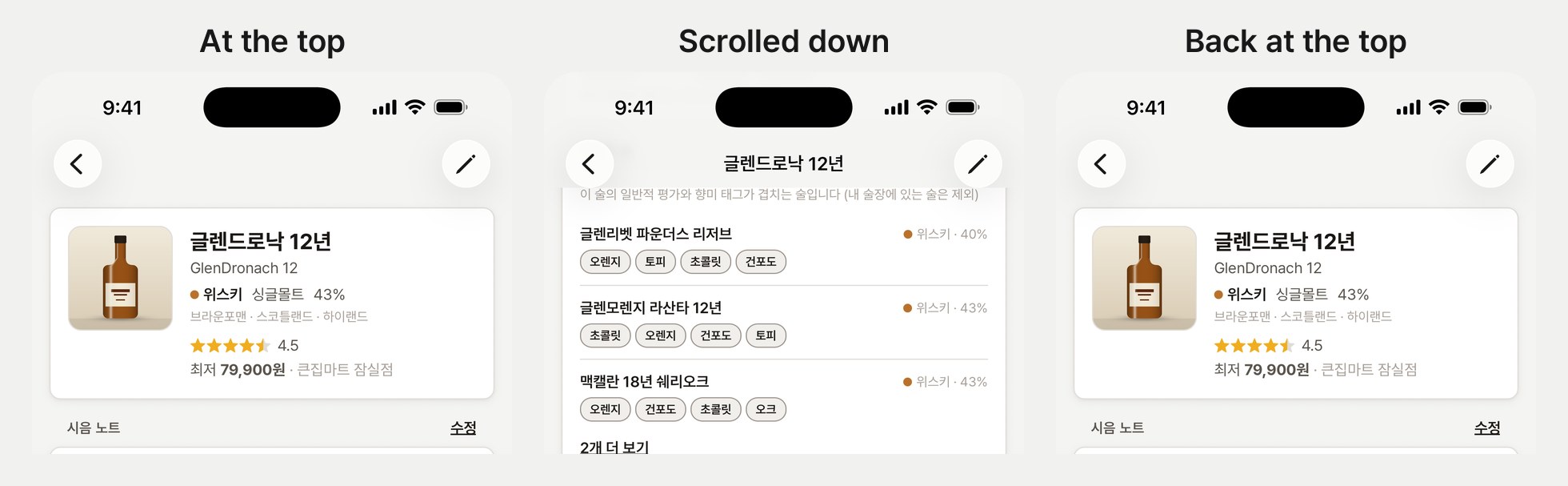
The last thing I fixed before submitting Sulnote to the App Store was a thin line. On a drink's page, if you scrolled down and back up, a line stayed under the navigation bar. Claude Code tried to reproduce it on the drinks list, compared screenshots pixel by pixel and found nothing. It found the cause only after I sent three screenshots of the drink page: once the stronger blur under the bar (scrollEdgeEffects.top: 'hard') appeared, it never went away. Claude made it apply only while the drink's name is showing in the bar, checked the fix by dragging the page in the Simulator with Lunhand, the computer-use MCP server I make, and uploaded build 9. At 4:15 pm on Tuesday I typed 제출해 ("submit it"), and it sent the app to App Review through the App Store Connect API.
Sulnote (술노트) is for writing tasting notes on drinks and keeping track of what you paid for them. It's in Korean and only going to the Korean App Store. Until Monday it was only a web app, used by me and a few friends. I asked Claude Code to turn it into an App Store app at 8:16 that Monday morning, 32 hours before the submission. It's waiting for review as I write this.
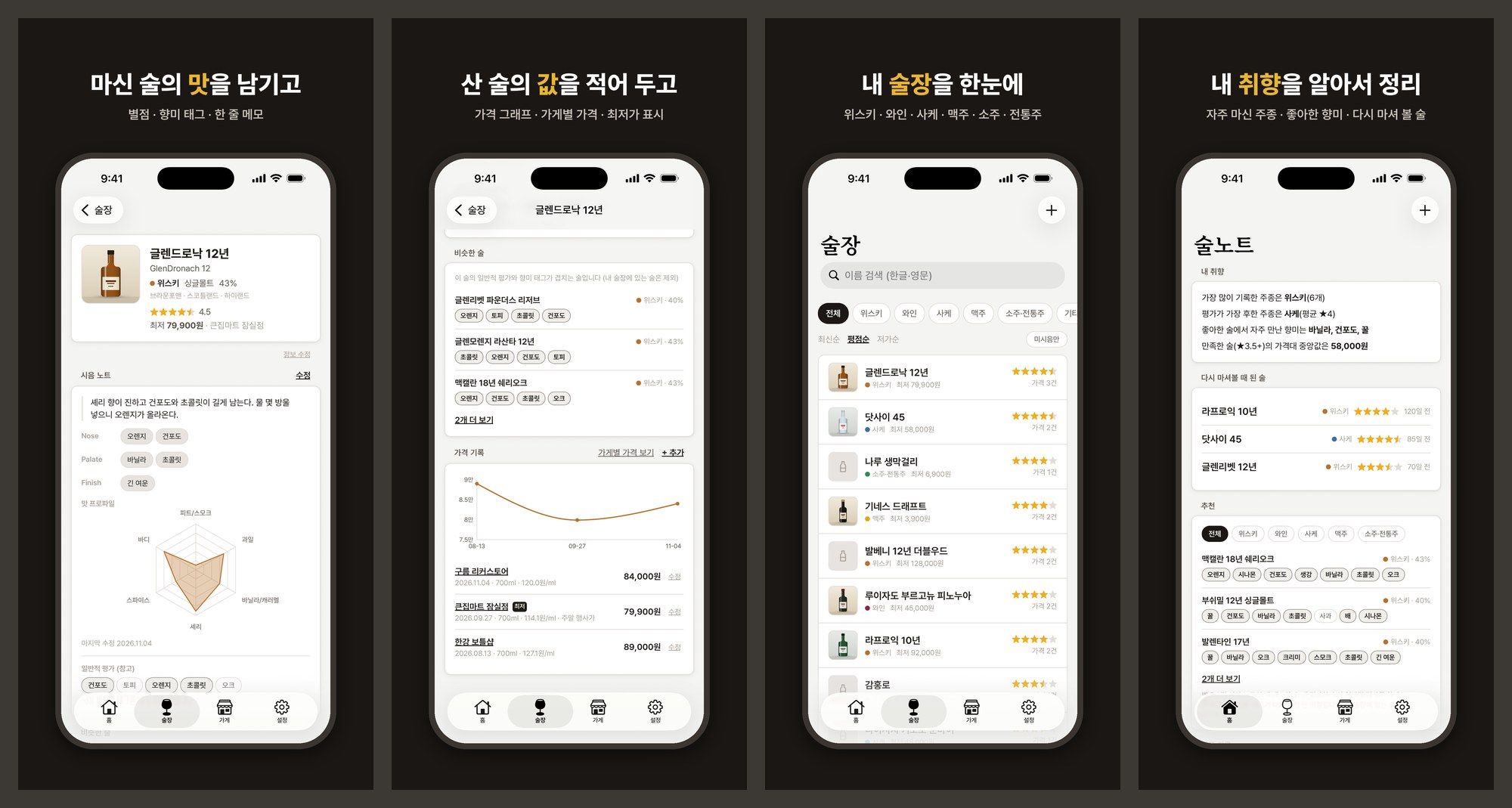
A wrapper would have taken a few days
Claude Code's first plan was the quick one: wrap the deployed site with Capacitor and add some native features. That was a few days of work, with the risk that Apple would reject it as a repackaged website under guideline 4.2.
I wanted something else: the records and the drink catalog on the phone, no login, ads with a paid way to remove them, and an actual app rather than the website in a package. Claude had five subagents researching in parallel and pointed out that with the data on the phone and no login, the web app's 14 server actions and 650 lines of query code had to change anyway, so everything might as well live inside the app. I picked Expo, with SQLite on the phone using the same Drizzle schema and the catalog shipped inside the app. Ads could wait for a second version. Claude estimated three to four weeks of its own work.
There was no Xcode on the Mac. Claude asked me to sign in to Apple's developer site in Chrome so it could download it, and I asked what for. It had judged from a tab that was still loading, because it couldn't read Chrome's tabs while "Allow JavaScript from Apple Events" was off, a security setting it had chosen not to touch. I told it to turn it on itself. It did, through Chrome's menu with Lunhand, found I'd been signed in all along, and apologized. Xcode 26.6, 2.3 GB, downloaded in about four minutes. My part was one line with sudo.
The colors were too Claude
The first screens copied the web design on purpose, and I said the colors were too Claude. The web app has a cream background with an orange-brown accent, and Claude agreed that its own app uses the same pair. It drew the home screen in three new palettes and recommended bottle green, because a green bottle reads as a drink at once in Korea. I picked black and white with a color for each type of drink.
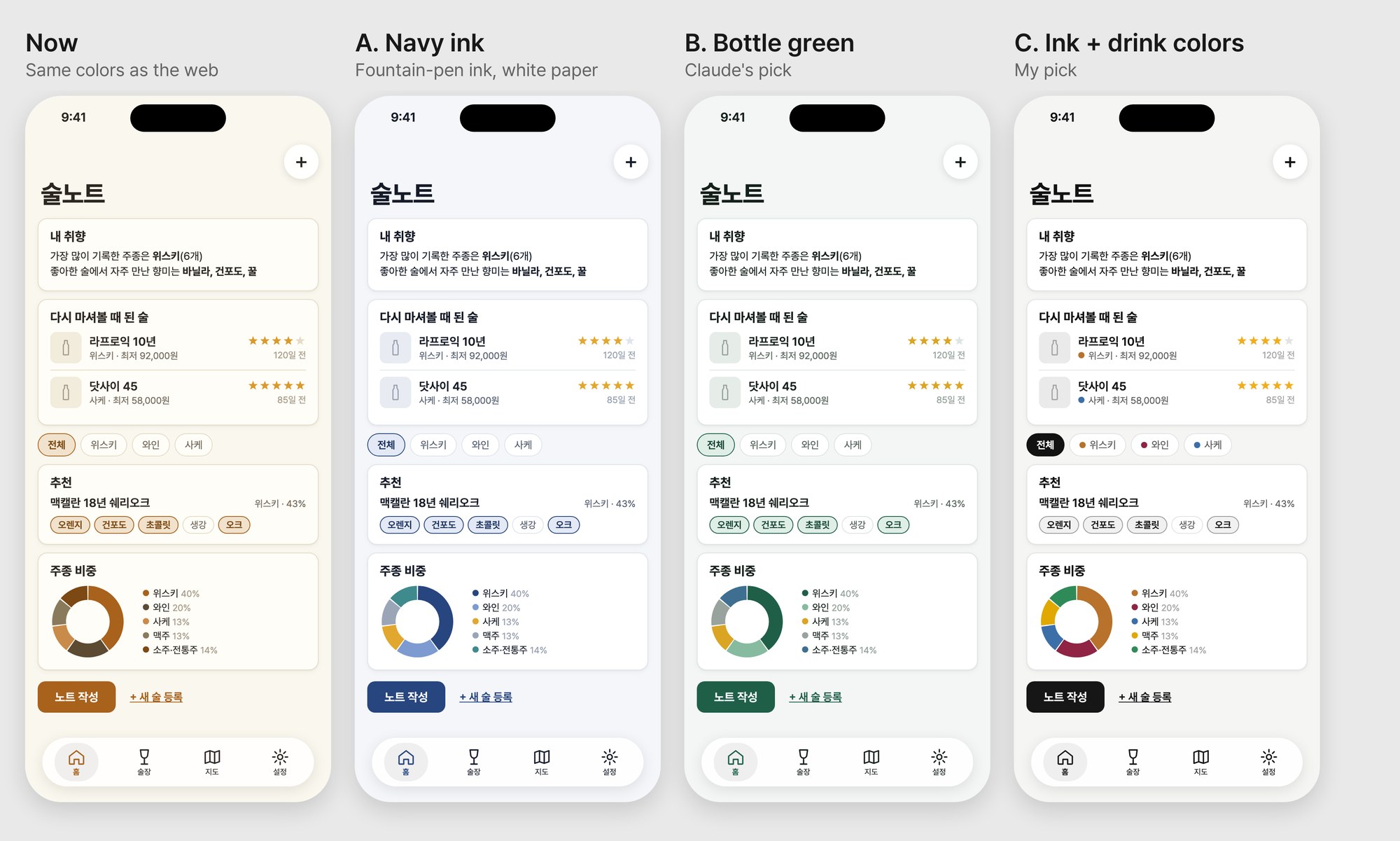
Six layout questions it had asked in text sat until I asked for pictures. It drew the current version and its recommendation for each, sent them at 3:29 pm, and I had replied to all six by 3:34.
The heading font went the other way. Along with those pictures, Claude withdrew its own earlier suggestion of serif headings, because Claude's app sets text in a serif and serif headings would undo the reason we'd dropped the cream. I asked for more options. It drew eleven and warned that the two serif ones felt like Claude. I took one of them, MaruBuri, but only for the word 술노트 on the home screen, and on Tuesday afternoon I put it on every tab's title.
The icon
Claude rendered its first eight icons with the renderer from Xcode's Icon Composer, in iOS 26's light, dark, tinted and clear looks. None of them started from the tumbler icon the web app had on my home screen, and I threw them all out. The second set started from the tumbler. The next morning I brought an SVG of a tulip tasting glass and asked for the same shape in other colors. Claude recommended a dark glass on white and advised against #6, whose gold could read as beer or honey water. I picked #6.
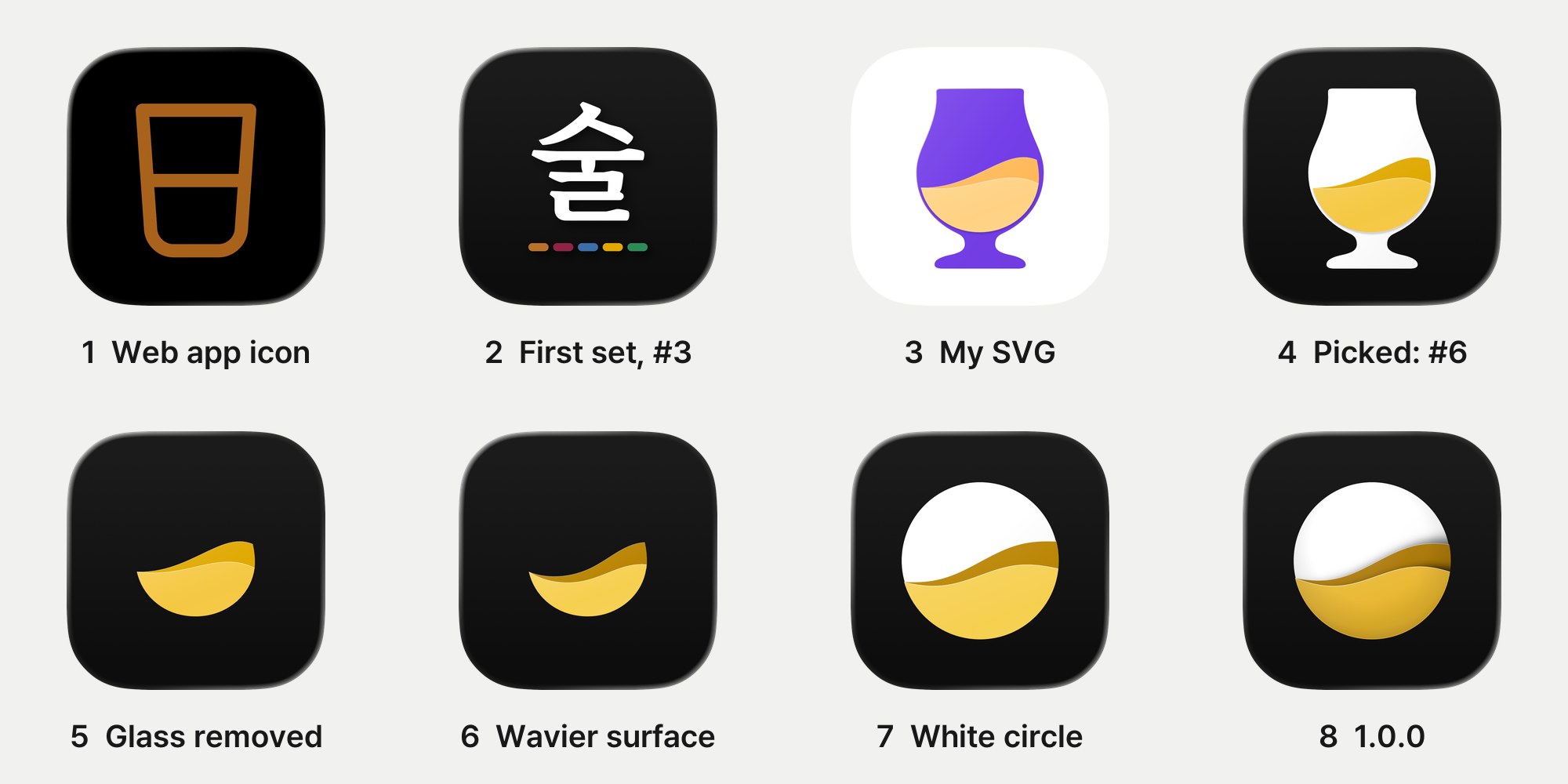
At 10:25 on Tuesday I asked to see the liquid without the glass. Claude said it now looked like a gold half moon, a slice of lemon or a smiling mouth, and suggested keeping #6. I kept going: three layers, which merged into one at home-screen size, then two with more contrast, then a waterline that dips before it rises. When I said the curve looked awkward, Claude found it had been joined from pieces whose bend changed at every joint, and redrew it as one sine wave. The white circle behind the liquid was my idea; Claude said it made the shape read as a glass seen from the front again. At 11:17, 52 minutes and twelve comparison images later, I picked dark gold with shadows between the layers. In the afternoon I asked for a slight dome, like the Safari icon.
Shops without addresses
The plan had a map: search for shops with Kakao's local API through a small relay on this site, save each shop's address and coordinates, and show them as pins. On Monday evening I asked where to get the Kakao key. While looking, Claude found answers from Kakao's operators on their developer forum: local search results, names, addresses and coordinates included, can't be stored in any form, even for a place the user picked. Only the place ID and URL can.
The next three hours went into other routes: Apple Maps search (a test program got 25 results for "liquor store" in Seoul), handing off to map apps, Naver's search API (five results at most, no place ID), and public business data, free for anyone to use, that lists about 147,000 shops selling alcohol. At one point Claude offered to save addresses anyway, against Kakao's terms, noting that a small app probably wouldn't be noticed, though it recommended the compliant option. I told it, not politely, to go and find the proper way too. It wrote a rule into its project memory: when terms get in the way, look for the legitimate route, with sources, first.
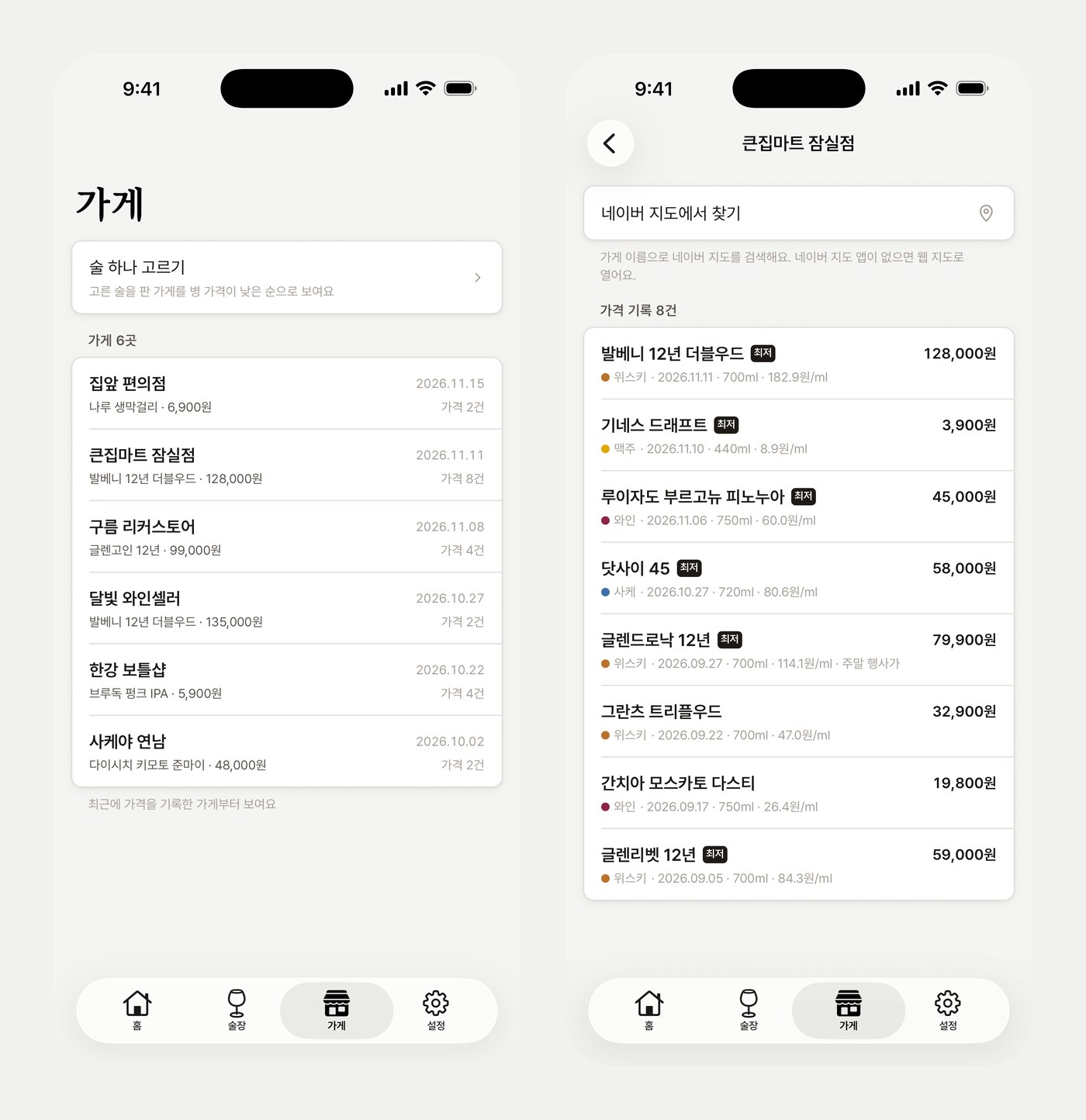
Once we weren't keeping anything from Kakao, I asked whether Naver wouldn't be better, and at 10:19 pm we settled it. The first version stores only the shop's name, and a shop's page has a button that searches Naver Map for that name, in the Naver Map app if it's installed and on the web if not. There's no address, no coordinates, no location permission and no relay. The map tab became a Shops tab.
Signing, TestFlight and the store page
On Tuesday morning I made an App Store Connect API key and put the file where Claude asked. Within five minutes it had registered the bundle ID, made a private key and a certificate request with openssl, got the distribution certificate, put it in a keychain of its own so builds wouldn't stop at a password prompt, and made the App Store profile. The app record itself can't be created through the API, so Claude did it in Safari with Lunhand in three minutes, including a right-click menu it opened by mistake and closed. Later it also published the privacy label, Data Not Collected, and filled in the seller details Korean e-commerce law requires, up to a six-digit code Apple emailed me, which I entered.
The first build went up to TestFlight at 9:19, and the fourth at 12:17. In between, I exported my records from the web version, a 1.6 MB zip, and imported them into the app on my phone. Then I asked for a close button on the backup reminder, and for a backup to count only once the file had actually been saved or sent.
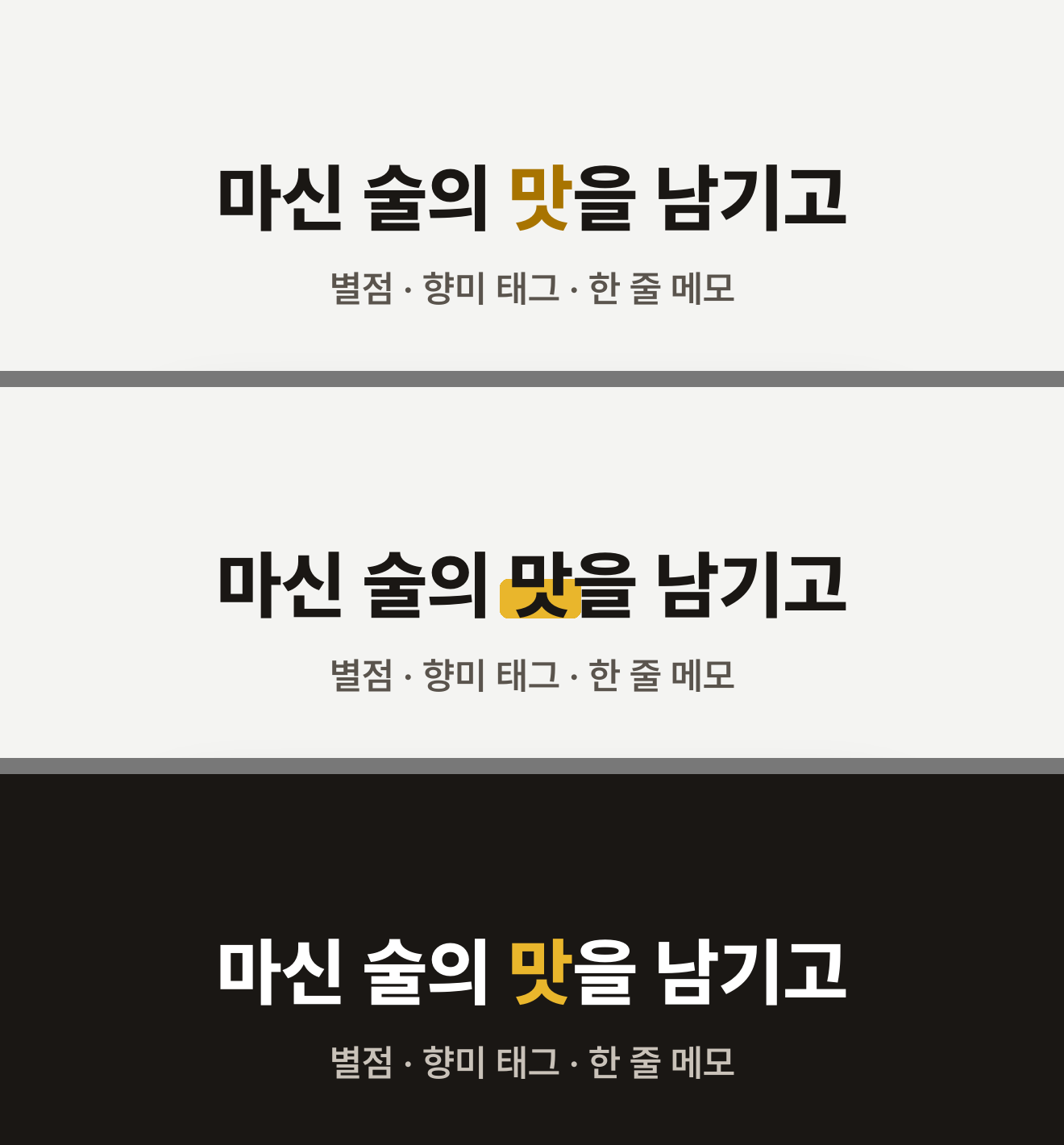
For the subtitle, Claude first recommended 술맛과 술값을 한곳에, roughly "the taste and the price of your drinks, in one place". When I asked for more options it switched to "what I drank, what I paid", because 술값 can also mean what you spend on a night out. I kept the first one. For the screenshots, the light version marked a word in dark gold, #a87400, which I said looked like poop, so the store got the dark version.
Five builds of 1.0.0
Tuesday afternoon went to builds 5 to 9, all of them version 1.0.0. When I asked why the version wasn't going up, Claude said the version is the first edition and the builds are proofs pulled before printing. Each came from something I asked for while trying the app: the dome on the icon, the serif title on every tab, matching search fields, an edit pencil in the bar with back buttons reduced to ‹, and the line from the top of this post.
Build 5 took 31 minutes, because Claude handed an icon change to a subagent that read the project from scratch, built an extra copy for the Simulator, took light and dark screenshots and wrote long notes. Build 6, which Claude did itself, took two minutes on the code, four to archive and upload, and about two for Apple to process. When I asked why the subagent was slower, Claude said the machine time was the same and the rest was the checks and notes it had asked for. I reminded it that I'd asked for small jobs to be done directly, and it agreed. The app had 39 automated tests at noon on Monday and 162 at submission.
Sulnote is waiting for review now. Apple says it reviews at least half of submissions within 24 hours and 90% within 48. Release is set to manual, so if it passes, I'll press the button myself.
Two of my questions that afternoon came from web habits. Could I offer the app as a free download on the KALTI site, and did it need an auto-updater like Lunhand and Limi have? No to both: the site can link to the App Store, and the App Store does the updating. Ads and a paid way to remove them are planned for a later version.
Update, November 19: Sulnote passed App Review, and at 8:04 this morning Claude Code released it through the App Store Connect API. It's now on the Korean App Store, and Sulnote's page on this site shows the screens and what the app does.